
External Affairs Minister S Jaishankar met his Chinese counterpart Wang Yi in Manila, reiterating that peace and tranquillity in border areas are prerequisites for normal India-China relations. He stressed the importance of mutual respect, interest, and sensitivity, while also raising concerns about market access, trade imbalance, and supply chain uncertainties.

Asked about the reports of the troops on both sides disengaging and moving back to their previous positions, Chinese foreign ministry spokesperson Hua Chunying told a media briefing in Beijing that both sides are taking steps to ease the situation along the borders.
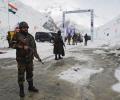
Indian and Chinese militaries on Monday moved back their frontline troops to the rear locations from the face-off site of Patrolling Point 15 in the Gogra-Hotsprings area in eastern Ladakh and dismantled temporary infrastructure there as part of a five-day disengagement process.

India and China held constructive talks on the situation along the Line of Actual Control (LAC) in eastern Ladakh, emphasising that maintaining border peace and tranquillity enabled progress in normalising overall relations.

I had found spending one night at 14,500 feet inside a cottage difficult to get by -- struggling to breathe in the cold, thin, mountain air. Here, our soldiers had fought a ferocious battle at much greater heights in bone-chilling weather, worse than I had encountered. 114 men were killed in action in a 16-hour epic battle against China in Rezang La, the farthest outpost along India's border with China.

National security advisor Ajit Doval arrived in Beijing on Monday for a two-day visit to take part in the Special Representatives talks on the India-China boundary question with his Chinese counterpart and Foreign Minister Wang Yi.
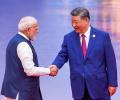
Ahead of Xi Jinping's visit, National Security Advisor Ajit Doval and Chinese Foreign Minister Wang Yi held extensive talks in Beijing on August 25 on the boundary issue and reached an eight-point consensus.

Chinese airline China Eastern is set to begin its Delhi-Shanghai flight from Sunday, days after IndiGo's flight to Guangzhou from Kolkata, marking the resumption of the flight services between the two countries after a gap of five years.

The amazing story of how a little known cheese from Ladakh stunned the world!

China Eastern Airlines has resumed its Shanghai-Delhi service after a five-year gap, marking the first mainland Chinese carrier to restore direct flights to India this year. The resumption follows the resolution of border tensions and aims to boost trade, economic, and cultural exchanges between the two countries.

Bengaluru's Ujaan Shivarama, a 15-year-old mountaineer, has successfully summited the 6,250-metre Kang Yatse II peak in Ladakh, making him one of the youngest Indians to achieve this feat. He faced extreme weather conditions and was part of a team where only three out of 14 experienced climbers reached the summit.

'The Chinese military cannot advance much in Ladakh, even if they want to.' 'Similarly, in Arunachal Pradesh, they can rename a village or two, intrude here or there, but cannot do much more realistically.'
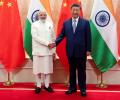
India has asserted that the state of its border with China directly impacts the broader bilateral relationship, emphasising the critical importance of maintaining peace and tranquillity along the Line of Actual Control (LAC). The Ministry of External Affairs also firmly rejected China's claims over Arunachal Pradesh, reiterating its status as an integral part of India. This stance was reiterated during a recent Working Mechanism for Consultation and Coordination meeting, where both sides agreed to continue using diplomatic and military channels to resolve outstanding issues.

Lt Gen Baggavalli Somashekar Raju will take over as the next vice chief of the Army Staff on May 1, the defence ministry said on Friday.

Prime Minister Narendra Modi conveyed to Chinese President Xi Jinping that peace and tranquillity along the frontier remains an "essential" basis for the development of India-China relations, even as the two leaders welcomed "steady progress" in bilateral ties during their talks on the sidelines of the BRICS summit.
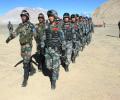
The talks between the two armies are going to be held this week at multiple locations including Patroling point 14 (Galwan area), Patrolling point 15, and Hot Springs area, top government sources said.
National Security Advisor Ajit Doval engaged in Special Representatives talks with Chinese Foreign Minister Wang Yi in Beijing, focusing on the India-China boundary question and enhancing bilateral relations. These crucial discussions precede Chinese President Xi Jinping's anticipated visit to New Delhi for the BRICS summit, aiming to address persistent border differences and stabilise ties strained by past conflicts like the Galwan Valley clash.

In July, tension emerged in Taksing, a remote village in the Upper Subansiri district of Arunachal Pradesh after locals sighted PLA soldiers.
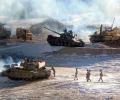
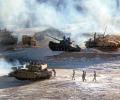
The army shared pictures of tanks and convoys of light armored vehicles moving with soldiers and equipment towards the rear areas as part of the disengagement process. Large number of Chinese tanks can be seen moving away from the south bank of the Pangong Tso.

India on Tuesday conveyed to China the importance of maintaining peace and tranquility along the Line of Actual Control (LAC) for overall bilateral ties as national security advisor Ajit Doval held talks with Chinese Foreign Minister Wang Yi focusing on delimitation of the frontier and sustaining work on trans-boundary cooperation.

India has lodged a strong protest with China for carrying out construction activities in the Shaksgam Valley, asserting its claim over the territory and rejecting the China-Pakistan boundary pact of 1963.

'China wants to control and divert rivers.'
Chinese President Xi Jinping described India and China as "good neighbours, friends and partners", saying that achieving "dragon and elephant dancing together" is the right choice for both countries.

The new title is likely inspired by the film's first track Maatrubhumi, sung by Arijit Singh.

The Indian Army began patrolling at Demchok on Friday, days after Indian and Chinese troops completed disengagement at the two friction points in eastern Ladakh, Army sources said.
While tensions have eased at several friction points and mechanisms for managing the boundary have been reactivated, underlying differences persist. Disputes over naming practices in Arunachal Pradesh, continued infrastructure development on both sides, and unresolved questions regarding patrolling rights indicate that the structural gap remains, notes Dr Kumar.

China on Wednesday said the Chinese and Indian militaries are implementing the resolutions concerning the disengagement in eastern Ladakh along the Line of Actual Control (LAC) in an 'orderly' manner.

Defence Minister Rajnath Singh met his Chinese counterpart Admiral Dong Jun in Bishkek to discuss maintaining peace and tranquility along the Line of Actual Control (LAC) and broader regional security concerns.
The central government has revamped the Khelo India Scheme's funding pattern, allocating a Rs 565 crore component for states to co-share the cost of future sports infrastructure development projects over a five-year plan. This new model, part of a Rs 29,054 crore outlay, aims to increase state ownership and participation in sports development, significantly expanding the scheme's reach and athlete base.

India has resumed issuing tourist visas to Chinese nationals through its missions and consulates worldwide, marking a step towards rebuilding ties after the resolution of the eastern Ladakh military stand-off.

The Indian and Chinese militaries held a fresh round of high-level military talks focusing on maintaining peace and security along the Line of Actual Control (LAC) in eastern Ladakh.
'We won not (only) because we were able to carry out long-range precision strikes.' 'That is, of course, one of the reasons but we had better situational awareness about what's happening than Pakistan.'
India and China will resume direct flight services by the end of this month after a five-year gap, signaling an effort to rebuild ties strained by the border standoff in eastern Ladakh.

Two army personnel, including a Lt Colonel, died and three officers were injured when a boulder fell on an army vehicle in eastern Ladakh.

The monthly average rainfall over India is expected to be below normal during July, the India Meteorological Department said on Tuesday in its monthly forecast.

China on Tuesday confirmed that it has reached an agreement with India to end the standoff between the two armies in eastern Ladakh.

India has strongly criticised China's practice of assigning 'fictitious names' to areas within Indian territory, stating that such actions are futile attempts to alter reality and negatively impact efforts to normalise bilateral relations.

China has welcomed the appointment of Vikram Doraiswami as the new Indian Ambassador, expressing optimism for improved Sino-India relations. Doraiswami, a seasoned diplomat with experience in China, is expected to play a key role in managing complex bilateral issues and fostering cooperation.

General Manoj Mukund Naravane's memoir has triggered a controversy by revealing behind-the-scenes decision-making during the 2020 India-China standoff in Ladakh. Its candid account of military and political responses at a critical moment has reignited debate over civil-military relations, accountability, and the limits of disclosure in matters of national security.

India has been maintaining that its ties with China cannot be normal unless there is peace in the border areas.
